The Trade-In Maths They Hope You Won’t Do

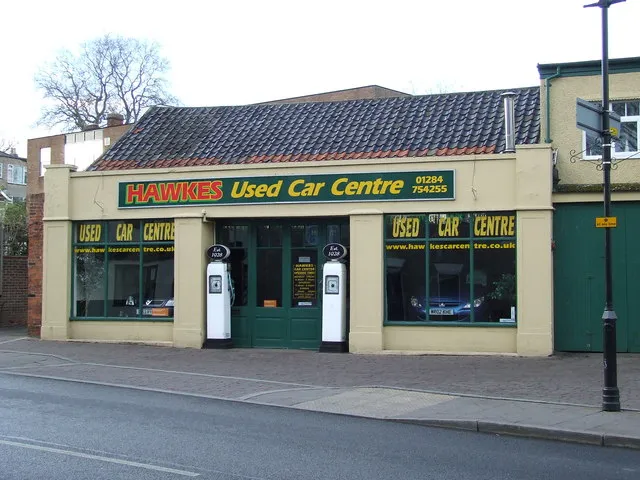
Photo: David Dixon, CC BY-SA 2.0, via Wikimedia Commons
'We can give you £4,500 for your old car' sounds like a result. It is also one of the easiest numbers in the car business to move around. Part-exchange is not one deal. It is two: the dealer buys your car and sells you theirs. The headline trade-in figure can flatter the deal while the cost to change stays exactly where the dealer wants it.
Here is the plain maths, and a checklist for keeping the conversation honest.
What the forecourt is actually buying
A dealer is not paying retail for your car. They are paying something closer to trade value, then spending money to get it ready: valeting, minor repairs, MOT, warranty, advertising and the risk that it sits on the forecourt for weeks. If your car would retail at £9,000, a £6,000 trade-in offer is not automatically an insult. The gap pays for the dealer's costs and margin.
That does not mean you have to accept the first number. It means you should compare like with like.
The only number that matters: cost to change
Cost to change is the cash difference between the car you are buying and the car you are handing over. Ask for it in writing.
Example: the car is advertised at £15,000. The dealer offers £4,000 for yours, so the cost to change is £11,000. Now ask what the cash price would be without part-exchange. Suppose they would sell it for £14,200 cash. If you could sell your car privately for £5,000, your net cost would be £9,200, before the hassle of private selling.
Or suppose the dealer will do the car at £13,800 with no trade-in and £4,000 for yours. The cost to change is £9,800. Same car, same trade-in figure, very different deal. That is why the headline trade-in number on its own tells you almost nothing.
Why the big trade-in figure flatters
Dealers can over-allow on your car and hold firm on the screen price. They can also discount the car and offer a low trade-in. Both can end up at the same cost to change. The trick is to separate the two numbers before you get attached to either.
Finance makes this murkier. A monthly payment can hide a long term, a big deposit or negative equity from the old car. Ask for the total amount payable, the APR, the deposit and the settlement figure on your existing finance. If you owe more than the car is worth, that shortfall does not disappear. It gets rolled into the new deal unless you pay it off.
Compare three routes, not one
Private sale usually gets you the most money, but you have to deal with timewasters, test pilots, payment security and the joy of arranging viewings. Selling outright to a car buying service or auction is quicker, but the offer will usually be below private sale value. Part-exchange is convenient: the dealer handles the settlement, you drive away in the new car and you do not have strangers at your door.
None of these is automatically best. If your car needs an £800 repair and the MOT is due next month, a fair part-exchange can be sensible. If it is a clean, popular car with low mileage, a private sale may be worth the effort.
A practical part-exchange checklist
- Get a settlement figure if there is finance outstanding. Do this before you negotiate.
- Gather the V5C, service history, MOT certificate and spare keys. A complete history helps the offer.
- Get two or three independent valuations: online buyers, a local dealer and private adverts for similar cars. Adjust for mileage and condition.
- Clean the car. It sounds daft, but first impressions affect offers.
- Ask for the offer in writing, including what happens if the inspection finds a fault.
- Separate the negotiations: agree the price of the car you are buying, then agree the trade-in value. Then check the cost to change.
- Ask about admin fees, preparation fees and anything else added to the bill.
- Be honest about warning lights, damage and faults. Hiding them only moves the argument to collection day.
- Check the new car's MOT, service history and warranty as carefully as you checked the trade-in figure.
- Sleep on it. A part-exchange is not a race.
When a part-exchange makes sense
A part-exchange is not a rip-off by default. It is a convenience product with a cost. The question is whether that cost is clear. If the dealer gives you a fair trade-in, a straightforward cost to change and no surprise deductions, it can be a clean way to swap cars. If the numbers only work when you stop asking questions, walk away.
At Hyde Motors, the best part-exchange conversation is the boring one: here is the car, here is the offer, here is the cost to change, here is what needs doing. No illusions, no moving numbers. Just the maths.