The Logo Tax: Used Cars That Share Everything Except the Price
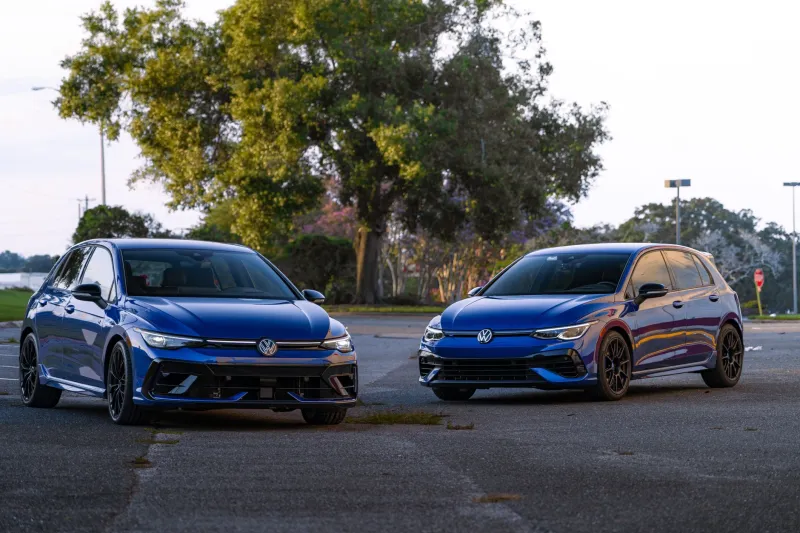
Walk down any used car row and you'll see it. Two hatchbacks, same size, same age, same engine size on the spec sheet. One wears a sensible badge, the other a posher one. The posher one is £2,500 more. Sometimes it's worth it. Often it isn't. That gap is what I call the logo tax — and as a used buyer, your job is to work out which bits are genuinely shared and which bits you're actually paying for.
Badge engineering, without the marketing gloss
Car makers have been sharing platforms for decades. It's not a con; it's how they make money. A floorpan, suspension mounting points, engines, gearboxes, wiring looms and switches get spread across several models. Then each brand tweaks the springs, the seats, the sound deadening, the standard kit and the price. The classic UK examples are everywhere: the Toyota Aygo, Citroën C1 and Peugeot 108 trio; the Kia Ceed and Hyundai i30; the Vauxhall Vivaro, Renault Trafic and Nissan NV300 vans; the Skoda Citigo, SEAT Mii and Volkswagen up! city cars. None of those pairs are identical, but plenty of the bits you'll actually replace are.
Then there are the looser relatives: cars on the same platform but with different bodies and engines. A Skoda Octavia and a Volkswagen Golf share plenty under the skin, but they're not the same car. A Nissan Qashqai and a Renault Kadjar are close cousins, not twins. The trick is not to believe the forum post that says 'it's the same car'. It's to check.
How to spot a real twin
You don't need a workshop. Start with the VIN plate and the door-shut stickers. Platform codes and engine codes are often stamped or printed there. Then open the bonnet and look at the obvious bits: airbox, battery tray, suspension turrets, bonnet hinges. If they look like they came out of the same parts bin, that's a good sign.
The proper test is the parts catalogue. Go to a motor factor website or a dealer parts desk, put in both registrations, and compare part numbers for consumables: oil filter, air filter, brake discs and pads, front suspension arms, drop links, clutch kit, pollen filter. If the numbers match, you've found shared bits. If they don't, don't assume the cheaper car is a bargain.
Check the wheelbase and track width too. Twins usually share them. And look at the windscreen stamp and the glass markings — sometimes the glass is shared even when the badge isn't.
Where the saving is genuine
Shared consumables are where the cheap badge pays you back. Brakes, filters, belts, sensors, suspension arms, clutches and bulbs are the things you'll buy over five years of motoring. If the Skoda version uses the same brake discs as the Volkswagen version, you're not paying a premium at the motor factor. Same for a Kia Ceed versus a Hyundai i30: plenty of service parts cross over, and independent garages know it.
Body panels and lights are usually model-specific, so don't expect a cheap wing mirror just because the platform is shared. But mechanical wear items are the big spend, and that's where the logo tax gets silly. A £300 saving on a set of front brakes is real money.
Parts availability matters too. A cheaper badge with a big dealer network and good independent support is easier to keep on the road than an obscure import. That's not about the logo; it's about the supply chain behind it.
Where the cheap badge is false economy
Here's the bit the badge-blind buyer misses. The cheaper twin often has different springs, dampers, anti-roll bars and bushes. It might ride harder on the 17-inch wheels that came as standard. It might have less sound deadening, so the motorway drone is worse. The seats might be flatter. The infotainment might be a generation behind.
Trim and safety kit matter more than the badge. A base-spec cheap twin with no rear parking sensors, no heated screen and a basic stereo can cost you more in the long run than a better-equipped posher twin. Check the standard equipment list for the exact year and trim, not the brochure for the model range.
Insurance is the quiet killer. Two cars with the same engine can sit in different insurance groups because of repair costs, theft rates and badge. Get quotes before you buy. Same for tyres: a cheaper badge on bigger wheels can mean £200 a corner instead of £120.
Resale is the other side. The posher badge often holds value better, which narrows the gap when you sell. Do the maths over three years, not just on the day. If the cheap twin loses £4,000 and the posh one loses £5,000 but cost £2,500 more, the cheap one still wins — but only if you keep it long enough for the saving to show.
The forecourt routine
Pick your pair before you go shopping. Know the platform code, the engine code and the shared part numbers. Then, at the forecourt, do four things. First, check the VIN and the door stickers match the advert. Second, drive both back-to-back if you can — the difference in ride and noise will tell you whether the cheap badge is a bargain or a punishment. Third, get insurance quotes on both. Fourth, check the MOT history and recall status for the exact model, not the platform.
Ask the seller what's been replaced and why. If a suspension arm is shared with a cheaper model, the receipt should show a sensible price. If it doesn't, ask why.
The honest verdict
Badge engineering isn't a magic money tree. It's a map. It tells you where to look for savings and where to stop assuming. The right cheap twin — good trim, sensible wheels, full history, shared mechanicals — can save you thousands over a posher badge without costing you anything in the real world. The wrong one — stripped spec, odd suspension, high insurance, weak resale — is a false economy dressed up as a smart buy.
So don't buy the logo. Buy the car. Check the parts numbers, drive it, insure it, and do the three-year maths. If the cheaper badge still stacks up, keep the difference. If it doesn't, pay the logo tax with your eyes open. That's not snobbery; it's just arithmetic.
Honest used cars and straight advice, Hyde.