Second Life, First Questions: Buying a Repaired Cat S or Cat N Car
There is a certain kind of advert you get used to seeing. A three-year-old family hatch, tidy in the photos, priced a good £2,500 under everything else of the same age and mileage. Scroll to the bottom and there it is, in smaller type: Cat S, repaired to a high standard, priced to sell.
Sometimes that is a genuinely good car going cheap because the market is nervous about it. Sometimes it is a car that should have stayed in the salvage yard. The badge on the advert tells you almost nothing — what separates the two is evidence.
What the categories actually record
Cat S means structural damage: the insurer decided the cost of repairing the shell outweighed the car's value. Cat N means non-structural — the old Cat D, in pre-2017 money — so no bent chassis legs, but still written off because the sums did not add up. Cat A and Cat B are breaker-only and should never reappear on a forecourt; if someone offers you one, the conversation is over.
Here is the bit people miss. The category describes the insurer's decision, not the quality of the repair. A Cat N car can be badly welded back together by someone with a hammer and a hope. A Cat S car can come back from a proper bodyshop with a four-wheel alignment printout, new airbags and a folder of photographs. The letter on the advert is a starting point, not a verdict.
The phone call to make before the deposit
Ring your own insurer with the registration before you fall in love with the paintwork. Plenty of mainstream insurers will cover a Cat S or Cat N car, but several will not, and a fair few will load the premium by twenty or thirty per cent. You want that answer in writing, not from a mate down the pub.
Finance is the other trapdoor. A lot of lenders simply will not advance money against a Cat S car, and some draw the line at Cat N too. If you are buying on PCP or HP, the finance company owns the car until the last payment, and they get a say. Check before you sign anything, because discovering this after a credit search is a miserable afternoon.
One more thing: the V5C does not mention the write-off. The marker lives on the insurance industry's database, which is why a tenner spent on a proper history check is the cheapest part of the whole purchase.
The discount cuts both ways
Repaired write-offs typically sit 20 to 35 per cent below clean book, depending on category, age and how well the seller has documented the work. That discount is real money in your pocket today. It is also roughly what you will lose when you sell, because the next buyer will have the same doubts you are having now.
That maths works beautifully if you plan to keep the car five or six years until it is worth buttons anyway. It works badly if you chop and change every eighteen months, because you will be trying to sell a Cat S car to a market that has plenty of clean ones to choose from.
Reading the repair, panel by panel
Do this in daylight, outdoors, and not in the rain. Look along each panel from a low angle and watch for ripples — filler and paint rarely sit perfectly flat. Run a fingertip along the shut lines between door and wing; a gap that tapers from 4mm to 7mm is telling you something. Check the rubber seals and window trims for overspray, and look inside the door shuts and under the bonnet for masking tape lines and sanding scratches under the lacquer.
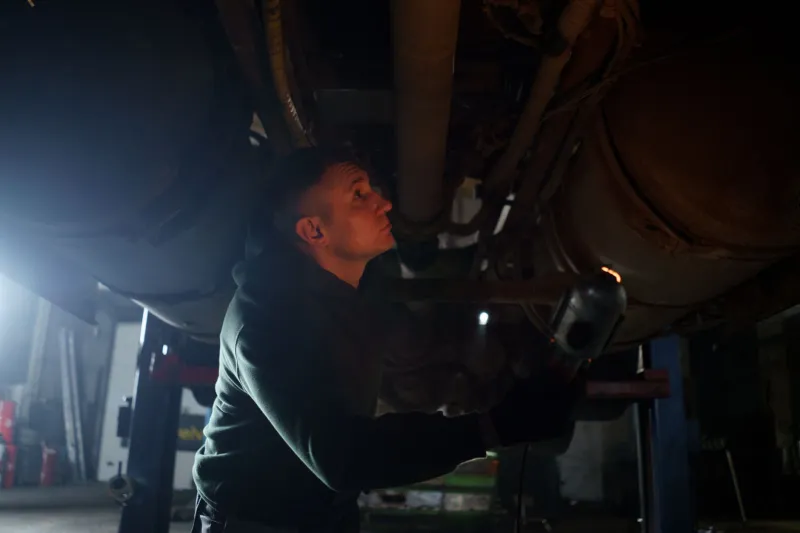
Underneath, fresh underseal is not automatically bad, but fresh underseal sprayed over seam sealer and brake lines is a distraction tactic. Look at the spot welds along the inner wings and boot floor — factory welds are neat and evenly spaced, and a row of wobbly replacements is a signature. Bolts with spanner marks on the suspension turrets or subframe mean somebody has been in there.
The airbag question, asked properly
Switch the ignition on and watch the airbag light. It should illuminate briefly and then go out with the rest of the dash. If it never lights at all, somebody has removed the bulb to hide a fault, and that is your cue to leave. If it stays on, the same.
A deployed airbag that has been 'replaced' with a resistor to fool the module is not a repair, it is a hazard. Ask for the invoice for the airbag modules and the seatbelt pretensioners. On a Cat S car with front-end damage, there should be one.
Suspension, alignment and a proper drive
Any Cat S car with damage near a wheel, subframe or chassis leg should come with a four-wheel alignment printout from after the repair. No printout, no deal — full stop. On the test drive, listen over speed bumps and drain covers, feel for a pull to one side under braking, and check the inner edge of each tyre for uneven wear. A car that has been straightened badly will eat tyres and you will pay for it.
The folder that decides it
A well-repaired write-off comes with a story you can follow: the insurer's engineer report, photographs of the damage before work started, invoices for parts showing whether they were new, used or pattern, a bodyshop invoice with a real business name and VAT number, and the alignment and airbag paperwork.
If the seller shrugs and says the photos went missing, the discount is not a bargain — it is you being paid to carry their risk.
Worth a punt, or walk away?
Worth considering: an older car, damage that was structural but localised — a rear quarter, a boot floor — repaired by a named bodyshop with the full folder, a genuine 30 per cent discount, cash buyer, long-term keeper, and your insurer confirmed in writing.
Walk away: no photographs, airbag light behaving oddly, paint mismatch across three panels, outstanding finance on the history check, front chassis leg damage with no alignment sheet, or a price so close to a clean example that you would be mad to take the risk.
A write-off is a story, not a sentence. Just make sure the seller can tell it to you properly, and that you believe them.